From Clones to Clarity: The Rise of Modern Chinese Hi-Fi
Once dismissed as copycats, Chinese audio makers have become the quiet innovators of modern sound. From garage soldering to laboratory precision, the story of “Chi-Fi” is no longer about imitation—it’s about perfection.
—
In the dim workshops of southern China during the 1990s, a new kind of music lover was born. He wasn’t buying $10,000 amplifiers from Japan or the U.S.—he was building them, one resistor at a time. Back then, the dream of owning a Western high-end system was impossible for most, but the desire to capture that sound—the glow of tubes, the texture of analog warmth—was strong enough to inspire a movement.
That movement began humbly. Enthusiasts studied schematics of Audio Research and McIntosh, salvaged transformers from broken radios, and assembled clones of legendary tube amps. Most of these early creations looked better than they sounded, but something important was happening: a generation of self-taught engineers was learning the language of sound.
—
The Age of the Clone
By the early 2000s, the cities of Shenzhen and Guangzhou had become fertile ground for audio tinkering. Tube amp clones from Yaqin or Line Magnetic flooded eBay and the back pages of audiophile forums. Some were crude; others surprisingly musical. But with every copied circuit came a deeper understanding of what made great sound great.
Slowly, the hobby turned into industry. The DIY scene matured into boutique workshops, and those workshops became brands. China was no longer just the world’s factory—it was turning into the world’s workshop of ideas.
—
From DIY to Design
The next generation of engineers had different ambitions. They didn’t just want to reproduce warmth—they wanted to master accuracy. The global hi-fi community, long skeptical of “Chi-Fi,” began to notice that something had changed. Instead of borrowing Western designs, Chinese engineers were publishing white papers, measuring distortion at micro-levels, and designing PCBs that looked like art.
Where once stood rows of glowing tubes, now came silent, cool-running Class-D amplifiers with distortion so low it was almost academic. The sound of modern China was now defined not by nostalgia, but by numbers—clean, precise, astonishingly transparent.
—
The Measurement Generation
Modern Chinese hi-fi speaks the language of data. Distortion, jitter, linearity—metrics once reserved for laboratories are now printed on retail boxes. These aren’t empty figures; they’re verified by independent testers worldwide. On Audio Science Review and ASR Labs, DACs from Chinese firms top measurement charts that used to belong exclusively to Western brands costing ten times as much.
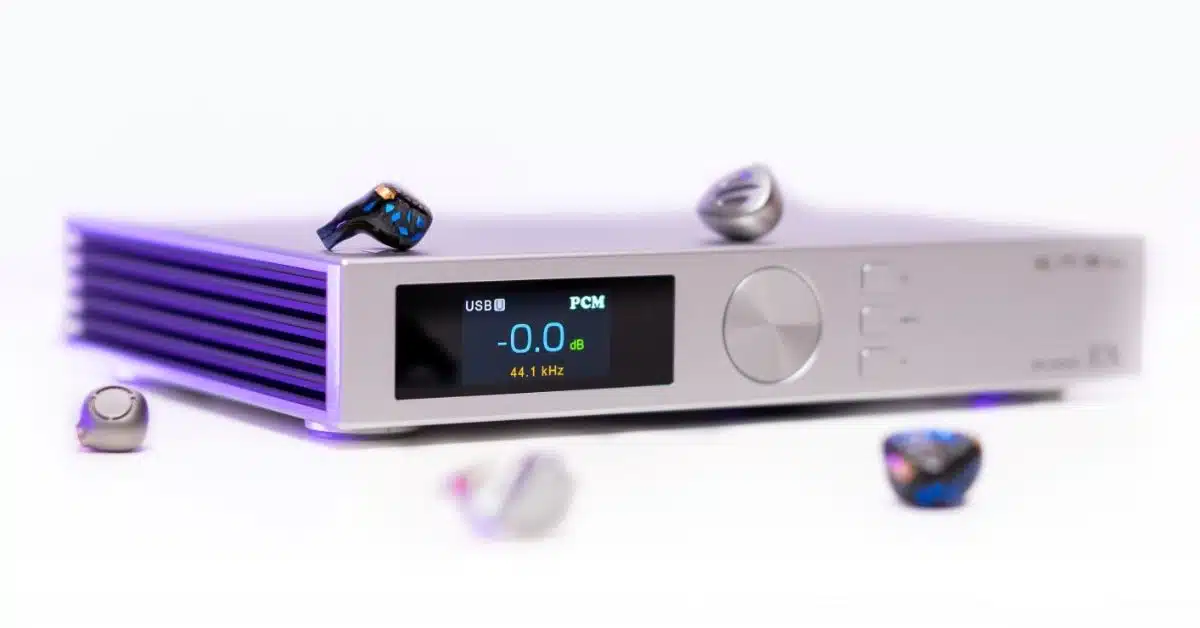
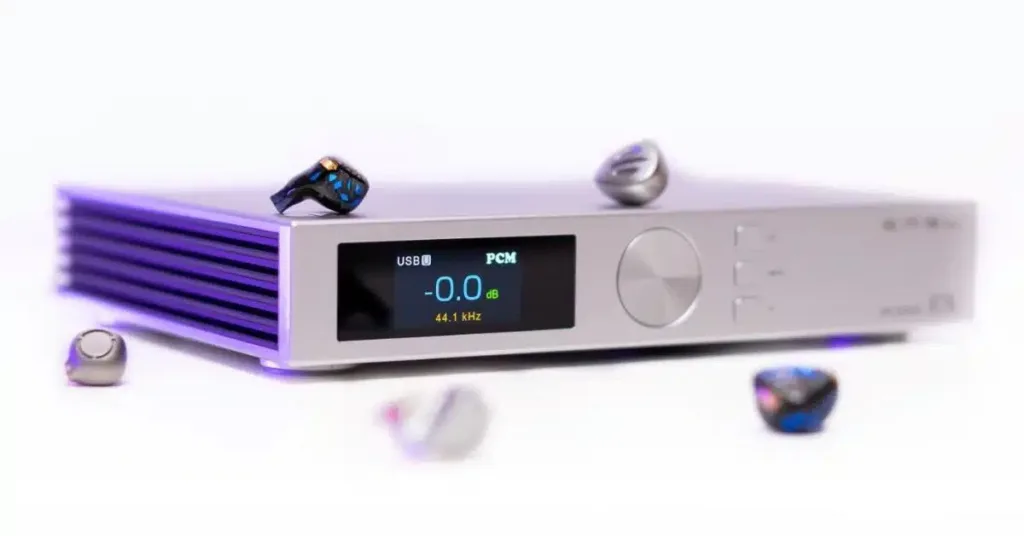
And yet, this is not just about performance—it’s about aesthetics, too. The new generation of gear looks the part: minimalist aluminium cases, sharp edges softened with subtle curves, tactile volume knobs milled from single metal blocks. The visual language of Chinese audio has become as confident as its sound.
—
Three Names That Changed Everything
Topping – Born in Guangzhou in 2008, Topping is perhaps the brand most associated with China’s measurement-first philosophy. Its D90, E70, and LA90 series regularly achieve near-perfect scores in independent lab tests, often rivaling Western gear costing thousands more. What’s remarkable is not just the precision, but the consistency—each device feels like a statement of intent: we can do this too, and do it better.
SMSL – From Shenzhen, SMSL took a slightly different path. Its designers understood that audiophiles want more than just numbers—they want usability. SMSL units often combine Bluetooth, USB, and balanced outputs in elegantly compact housings. The SU-X DACs and DA-9 amplifiers prove that Chinese design can be technical, musical, and beautiful all at once. SMSL’s house sound—if there is such a thing—is clean but never clinical.
Moondrop – The human end of the signal chain got its revolution too. Moondrop, a Chengdu-based brand founded by a handful of IEM hobbyists, transformed the perception of Chinese headphones. Their Blessing, Variations, and Aria models are now global bestsellers, beloved for their near-perfect adherence to the “Harman target” frequency curve and for their refined, almost artisanal design. What started as a DIY lab of dreamers is now shaping the reference standards of studio engineers.
—
Beyond the Numbers
Perfection, however, is a double-edged sword. Some purists argue that in chasing ideal measurements, modern Chinese gear risks losing the “soul” of music—the imperfections that make analog playback human. But even that critique is a kind of compliment. It means Chinese hi-fi is now being judged not as an imitator, but as an equal participant in the conversation about what makes sound real.
The truth is somewhere in between. Behind the precision lies the same spirit that drove those early tube-amp builders—the urge to make music accessible, to democratize fidelity. And that spirit is what connects the smoky DIY workshops of the 1990s to the gleaming CNC factories of today.
—
Looking Ahead
In 2025, Chinese audio companies are no longer “emerging.” They’re leading. Their production lines are smarter, their tolerances tighter, and their ambitions global. The next frontier won’t just be sound quality—it will be integration: streamers with native app ecosystems, amplifiers with AI-driven room correction, IEMs with adaptive acoustic tuning.
From clones to clarity, the journey of Chinese hi-fi has been one of relentless learning. What began as a story of imitation has become one of innovation—and, quietly, of leadership.
The rest of the world is still catching up.


Leave a Reply