By Dejan Pršić and AI Friends
In an era of rapid transformation — where artificial intelligence predicts our behavior, algorithms dictate market movements, and digital giants hold more power than some nations — one question rises above all others: Who truly controls the economy of the future?
That question stands at the heart of “TESG – Evolution, Not Revolution: The Future of Economic Sovereignty,” a new thought-provoking book by Dejan Pršić and his co-author collective, AI Friends.
The book proposes a radical yet deeply rational idea — that humanity doesn’t need another revolution. What it needs is evolution — a shift from dependence to autonomy, from control to cooperation, from centralization to distributed trust.
—
The System Is Cracking — and TESG Offers the Upgrade
For decades, the global economy has rested on the same architecture: central banks, national currencies, and corporate monopolies. But cracks are appearing. The rise of blockchain, decentralized finance, and AI-driven economies exposes both the fragility and obsolescence of this model.
Dejan Pršić argues that this is not the time to burn the old world down, but to rebuild it intelligently. “Revolutions destroy,” he writes. “Evolution refines.”
TESG — an acronym for Technology, Economy, Sovereignty, and Globalization — offers a new framework for the digital age. It recognizes that the future will be neither purely capitalist nor purely decentralized, but a dynamic equilibrium between individual autonomy and collective stability.
—
From Machines to Meaning: Rethinking the Role of Technology
Where previous industrial revolutions mechanized labor and centralized capital, the fourth one — driven by AI and automation — threatens to mechanize the human itself. TESG challenges this trend by repositioning technology as an instrument of empowerment, not domination.
“Technology should serve humanity,” the authors insist, “not replace it.”
The book traces the evolution of innovation from steam engines to algorithms, showing how each leap forward brought both liberation and inequality. In the TESG vision, the next leap must be ethical — technology must decentralize power, preserve privacy, and strengthen the individual’s economic sovereignty.
—
A New Kind of Economy — Beyond Banks and Borders
At the core of TESG lies a practical reimagination of finance itself. The model proposes open economic systems where transactions are transparent, currencies are digital yet stable, and wealth creation is no longer dependent on intermediaries.
DeFi, blockchain contracts, and digital assets form the skeleton of this new economy — but its soul is human trust.
Pršić illustrates a world where individuals use digital wallets instead of bank accounts, where companies operate as autonomous digital cooperatives (DAOs), and where governments integrate blockchain for transparent taxation and public budgeting.
The implications are staggering: an economy that adapts itself in real time, resistant to corruption, censorship, and the inefficiencies of bureaucracy.
—
Sovereignty for the Individual, Not Just the State
One of TESG’s boldest propositions is the redefinition of sovereignty itself.
In the 20th century, sovereignty belonged to nations. In the 21st, it must belong to people.
Economic sovereignty, according to Pršić, means control over one’s digital identity, data, and financial assets — the ability to exist economically without dependence on institutions that profit from one’s participation.
This concept of personal sovereignty aligns with a broader philosophical undercurrent: freedom as responsibility, autonomy as balance.
—
Not a Revolution — an Evolution
TESG does not call for chaos. It calls for coherence.
It doesn’t seek to replace governments or markets but to upgrade them. The goal is not disruption, but harmonic transformation — an economy that evolves rather than collapses.
As Pršić writes, “Revolutions seek to erase the past. Evolutions learn from it.”
By merging blockchain transparency with human empathy, AI efficiency with ethical awareness, TESG envisions a world where progress no longer comes at the cost of equality — where innovation and fairness coexist in one ecosystem.
—
The Book for the Age of Transition
“TESG – Evolution, Not Revolution” is more than an economic manifesto. It’s a roadmap for the 21st century.
Written in a clear, accessible language, the book bridges philosophy, economics, and technology — making complex ideas understandable and inspiring for policymakers, entrepreneurs, and everyday readers alike.
Each chapter unfolds like a step in humanity’s technological journey — from the legacy of the industrial revolutions to the birth of decentralized societies.
It challenges us to rethink what we mean by progress — and asks a deceptively simple question:
> What if the future is not about taking power, but about sharing it?
—
Why TESG Matters Now
The timing couldn’t be more urgent.
As global debt rises, trust in institutions falls, and AI reshapes industries faster than regulation can follow, the world is desperate for a model that combines freedom with accountability. TESG might be exactly that — not a political ideology, but a blueprint for systemic renewal.
Its core message resonates far beyond economics: human dignity must remain at the center of progress.
—
A Call to Think Differently
Dejan Pršić’s TESG doesn’t just analyze the world — it invites us to redesign it.
It asks readers, leaders, and innovators to imagine an economy where technology enhances human potential instead of replacing it, where globalization connects rather than dominates, and where sovereignty is measured not by borders, but by choice.
The book closes on a note both visionary and grounded:
> “TESG is not the end of capitalism, nor its enemy. It is its evolution — the next logical step in humanity’s pursuit of balance, fairness, and truth.”
—
About the Authors
Dejan Pršić is a visionary thinker, sculptor, and technologist whose multidisciplinary background spans economics, design, and philosophy.
AI Friends, his co-authoring collective, represents a collaboration between human creativity and artificial intelligence — reflecting the very principles TESG stands for: cooperation between man and machine.
Together, they propose not just a theory, but a movement — an intellectual and moral evolution toward a freer, smarter, and more humane economy.
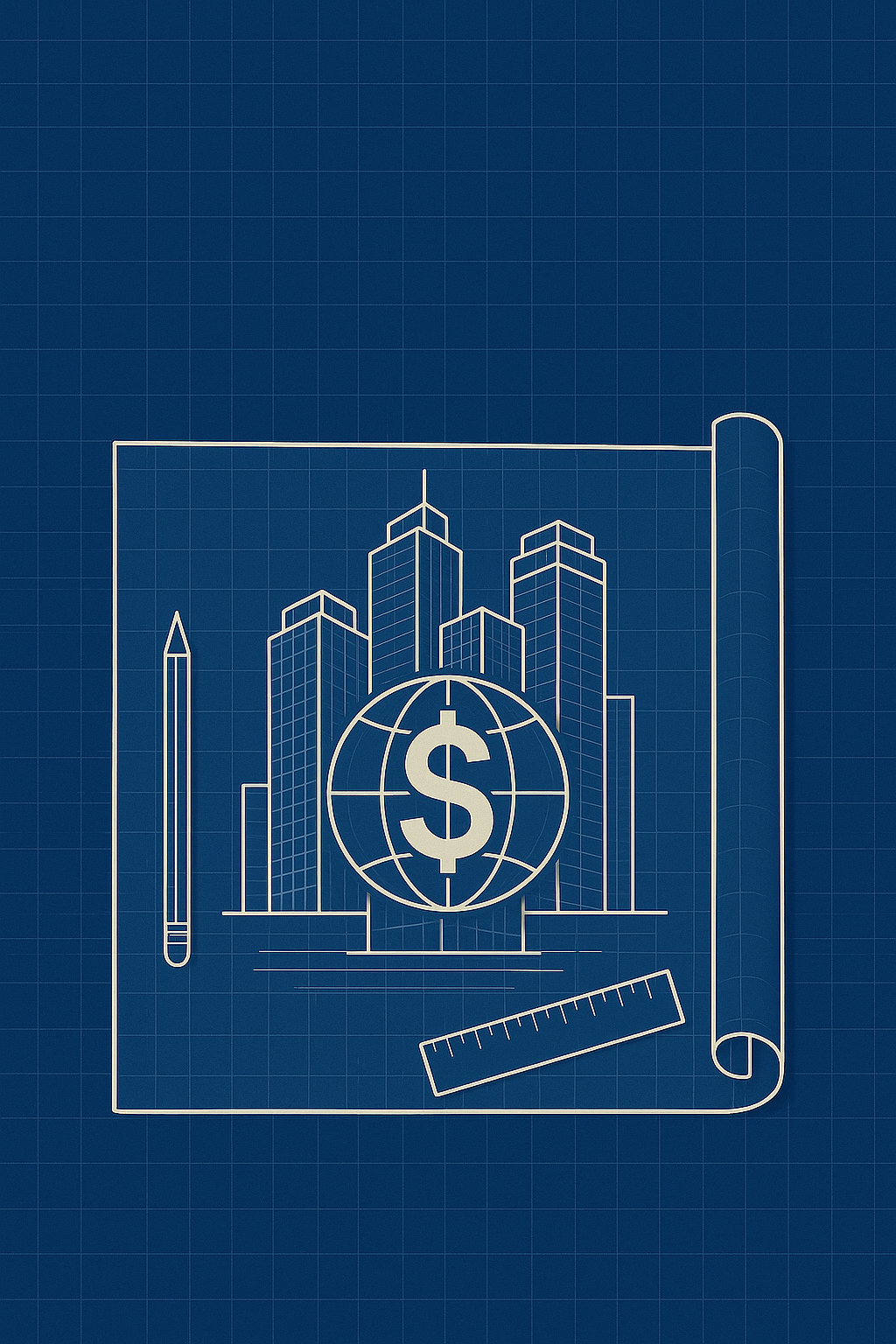
A New Blueprint for the Future: How TESG Redefines the Meaning of Economic Sovereignty
•
•
Recent Posts
- Martin Logan Odyssey (Hybrid Electrostatic Speaker)

- Gyros vs Kebab: A Delicious Clash of Street-Food Classics

- The Sound of Precision: How China Rewrote the Rules of Hi-Fi

Social Media
Advertisement

Leave a Reply